
Discover Ranthambore
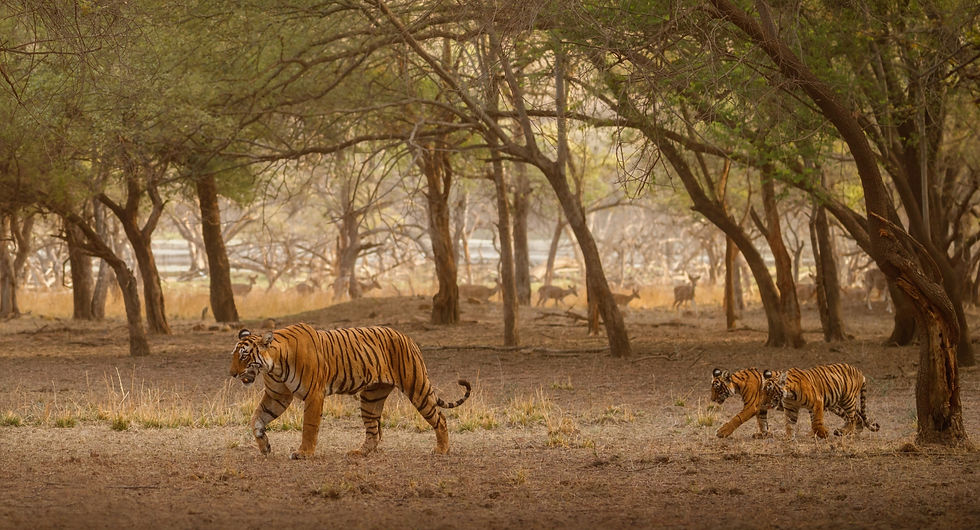
Framed by ancient stone ruins and rugged escarpments, Ranthambore offers a magnificent landscape where Royal Bengal Tigers roam freely among historic forts, dry dhok forests, and serene lakefronts. It stands as one of the few places on Earth where natural wildlife behavior unfolds against a backdrop of centuries-old heritage architecture
Why Ranthambore?

The Fort & Tiger Territory
Ranthambore is world-famous for its dramatic combination of historic 10th-century fort ruins, ancient stepwells, and habituated Royal Bengal Tigers roaming among stone structures.

Rich Wildlife
Beyond tigers, the park
supports leopards, sloth bears, striped
hyenas, caracals, nilgai,
sambar deer, and a high
density of marsh crocodiles.

Diverse Landscapes
Dry deciduous forest, open dhok trees, rocky crags, steep escarpments, and sprawling lakes create one of India's most iconic wilderness terrains.

A Photographer's Wilderness
The unique blend of heritage architecture, golden dry-forest lighting, and open lakefronts makes Ranthambore a premier destination for wildlife photographers.
Wildlife of Ranthambore
Mammals
Tiger, Leopard, Sloth Bear, Striped Hyena, Caracal, Jungle Cat, Nilgai, Sambar, Chital, Chinkara (Indian Gazelle), Wild Boar
Birdlife
Ranthambore supports a rich bird community, with over 300 species recorded in the reserve's official information, including the painted stork, crested serpent eagle, rufous treepie, and brown fish owl
Flora
Dhok trees dominate over 70% of the park, alongside banyan trees, peepal, mango groves, and dry deciduous scrub, supporting the reserve's varied wildlife habitats.
Explore Ranthambore Packages
THE RANTHAMBORE EXPERIENCE
More Than a Safari
Ranthambore is about more than searching for a tiger. It is the anticipation of entering the forest at first light, following tracks and calls, watching the landscape come alive and experiencing wildlife in its natural surroundings.
Every safari is different. Some bring unforgettable wildlife encounters; others reward patience with smaller discoveries, striking landscapes and moments that could never be planned.


When to Visit
Ranthambore
Winter & Early Summer
October – February
Pleasant safari conditions with cooler mornings and evenings. The lakes are full, migratory birds arrive, and the heritage ruins look striking against green vegetation.
Warmer Months
March – June
Warmer conditions and progressively drier vegetation significantly improve visibility, drawing big cats directly to remaining waterbodies like Rajbagh and Padam Talao.
Things to Know
Before Your
Safari
10 Safari Zones
The park is divided into 10 safari zones, comprising core areas (Zones 1–5) and buffer areas (Zones 6–10).
Must Book at Least 90 Days in Advance for Core Zones (Zones 1–5)
To secure entry permits for the primary core zones (Zones 1 through 5), you need to book at least 90 days in advance, as these high-demand permits sell out almost instantly.
Monsoon Closure
Core zones (Zones 1 to 5) close completely from July 1st to September 3